Product by Product
The Science Behind Each Recipe
The Science
Your average 1-to-1 gluten-free flour blends fail in cookies because they're formulated for mass production and all purposes — cookies made with them taste good… for gluten free. Cookies need the dough itself to hold together and develop chew. Without gluten's protein network, you get a sandy, scone-like crumb that falls apart.
The solution is a custom flour blend. Almond flour adds richness and structural support through its fat content. Tapioca starch provides chew and elasticity. Certified gluten-free oat flour (which we grind ourselves) adds fiber and mimics the way wheat flour creates a tender crumb. These three work as a system — each compensates for what the others lack.
Cashew butter is the binding agent. It's a dense, protein-rich fat that forms our fake gluten network. Paired with coconut oil, it creates continuity in the dough and prevents the crumb from separating during baking. Coconut oil's melting point is below the temperature of your mouth — it literally makes the cookie melt in it.
Xanthan gum acts as a secondary binder and is fully customizable. More xanthan = a thicker, denser cookie. Less = thinner, crisper. You can request this on a per-batch basis.
Our First Approach
We started with a standard 1-to-1 blend and wondered why every batch tasted chalky and fell apart when we bit into it. The texture was grainy, the spread was unpredictable, and there was no chew.
What We Learned
The 1-to-1 blend alone wasn't sufficient. We experimented with almond flour (too much made it dense), then tapioca starch in different ratios. We realized we needed to grind our own oat flour to control particle size and absorption. The real breakthroughs: cashew butter created structure the dough needed and complemented chocolate. Xanthan gum was a precision tool, not just a thickener. An overnight rest allowed the flour blend to fully hydrate, eliminating dry pockets.
Our Recipe
A secret blend including almond flour, tapioca starch, oat flour, cashew butter, coconut oil, and a carefully measured amount of xanthan gum. Shaped by weight, chilled overnight, baked from cold. Crisp edges, chewy center, dark chocolate throughout. Xanthan level is customizable per order.
The Science
A brownie's fudginess comes from a high ratio of fat to flour and the Maillard reaction that creates that glossy, crackled top. The key is that the fat needs to set properly during cooling to achieve the right crumb structure and that characteristic shine.
Unsweetened cocoa powder — raw, not dutch-processed — is crucial. Dutching mutes chocolate flavor. Raw cocoa has sharper, more complex notes that balance sweetness and create a deeper chocolate taste.
Almond flour contributes structure and richness. The xanthan gum in our flour blend stabilizes the fat and prevents the brownie from separating as it cools — it's what keeps the center fudgy instead of greasy.
Our First Approach
We assumed we could use a standard gluten-free flour blend and expect a traditional brownie. The first batch was either greasy or too cakey, with a waxy mouthfeel. We tried adjusting the fat amount multiple times without understanding the underlying structural issue.
What We Learned
Xanthan gum was either working for us or against us depending on how we mixed the dough. Over-mixing made brownies dense. Under-mixing left them greasy. We found the balance: gentle mixing, careful attention to bake time — these brownies develop their final texture as they cool, not while baking — and raw unsweetened cocoa powder for flavor depth.
Our Recipe
One of our nut-free products. Raw unsweetened cocoa powder, sugar, eggs, almond flour, and our gluten-free flour blend. Dense, glossy-topped, deeply chocolatey. Cut thick, wrapped individually. These aren't just good for gluten-free — they're the best fudgy brownies you've ever had.
The Science
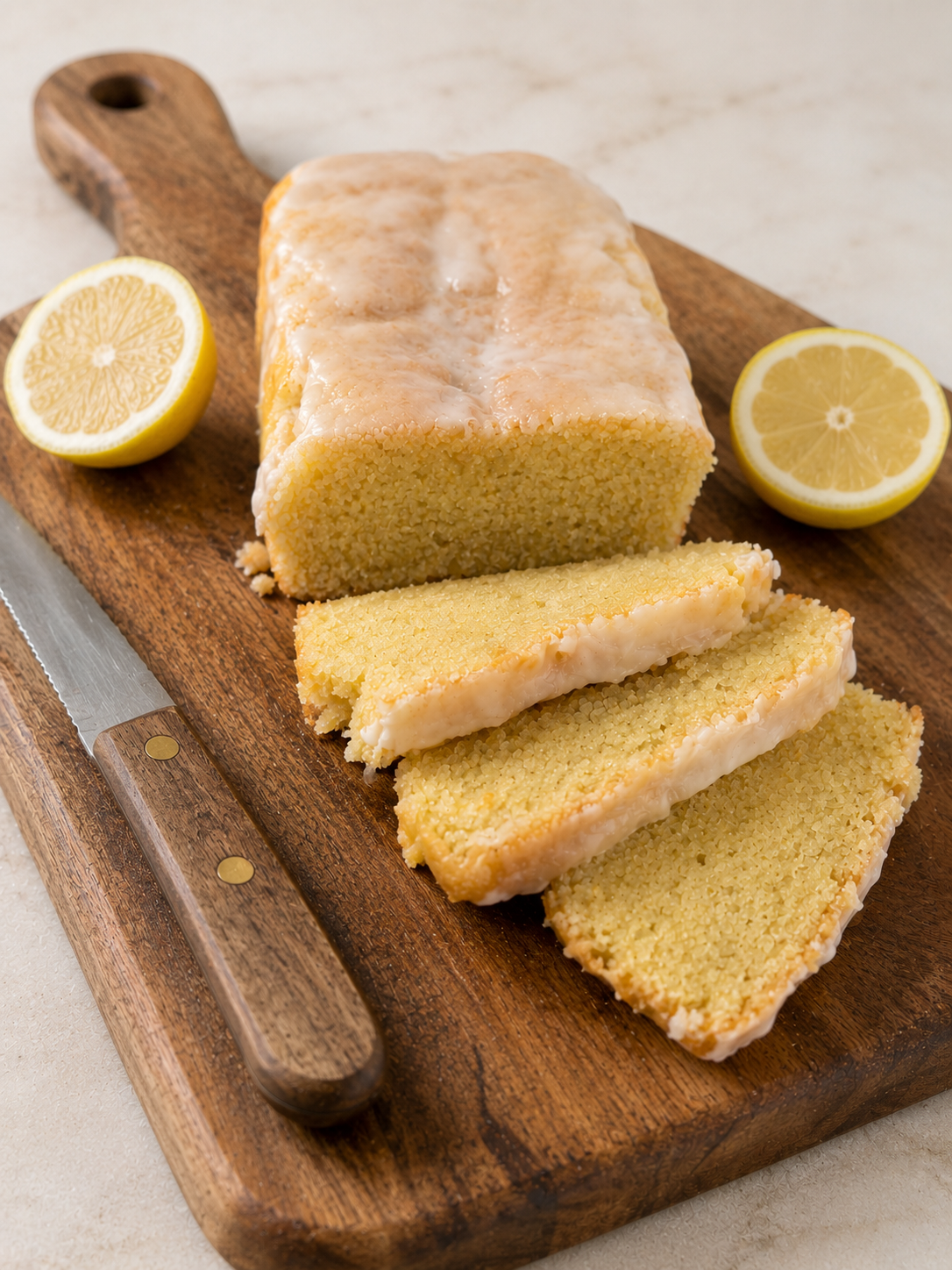
Gluten-free loaves have a fundamental problem: starches are the only building block available, and they can't create the protein network that gluten does. The result is either gummy crumbs (too much starch, traps moisture) or crumbly crumbs (not enough binding).
The solution is a multi-starch system. Different starches have different absorption rates and gel temperatures. By layering them — rice flour, brown rice flour, potato starch, sweet sorghum — we create a crumb structure that's tender but holds together when sliced.
Almond flour adds richness and fat that keeps the crumb soft. Unsweetened almond milk is neutral and won't compete with lemon. Fresh zest and juice provide brightness and complexity that extract can't match. The glaze locks in moisture and reinforces the citrus.
Our First Approach
We used a single gluten-free flour blend, thinking one blend would work for all applications the way all-purpose wheat flour does. The loaf was either gummy or crumbly, didn't slice cleanly, and the lemon flavor felt thin — we were relying too much on extract.
What We Learned
Different products need different flour systems. We started experimenting with starch combinations, adding almond flour for structural support, and switched to fresh zest and juice. The glaze isn't just for taste — it's functional, keeping the loaf moist as it sits, and the slight sugar crust provides textural contrast. These loaves need full cool time before slicing, or they'll crumble.
Our Recipe
Multi-starch base with xanthan gum as stabilizer, supplemented with almond flour. Fresh lemon zest into the batter; fresh juice both flavors the dough and makes the glaze. Slices cleanly, holds together, tastes bright. Shelf stability is excellent.
The Science
Our overnight rest allows flavor compounds to develop and spread through the final dough. When spices are soaked in liquid overnight, their essential oils hydrate fully and integrate more evenly. This is why chai from fresh spices and brewed tea tastes completely different from store concentrate.
Certified gluten-free rolled oats provide substantial texture. We grind our own oat flour for the dry components. Cashew butter is the binding agent — in an oat-heavy dough, it's essential for a cohesive structure. We use slightly less xanthan gum here than in our chocolate chip cookies, because oats already provide structural support and we want a more open crumb. A bake at 375°F straight from cold sets the edges quickly before spread happens.
Our First Approach
We made a standard cookie dough with chai concentrate, thinking it would be easier than brewing whole spices. The result tasted flat and one-dimensional. We also used too much fat and saw significant spread in the oven, losing the hearty texture we wanted.
What We Learned
Store-bought concentrate is not a shortcut to flavor — it's a loss of complexity. We switched to brewing our own chai concentrate from whole spices and black tea. Oats and chai spices together need less fat than a standard cookie, or the dough spreads. Cashew butter at a lower level provided just enough binding without making the cookie dense. The overnight rest made the spice flavors sing.
Our Recipe
Overnight rest with brewed chai concentrate (black tea plus whole spices), certified GF rolled oats, oat flour ground in-house, cashew butter, and slightly less xanthan gum than our chocolate chip cookies. Shaped into balls, chilled, baked at 375°F from cold. A maple glaze adds subtle sweetness while letting spice complexity come forward.
The Science
Cocoa powder is not just a flavoring — it's structurally active in cookie dough. It absorbs moisture and stiffens the dough the way flour does. If you don't account for this, you end up with dough that's either too dry (dense, cakey cookie) or too wet (spreads everywhere).
Blooming cocoa in hot water accomplishes two things: it deepens chocolate flavor (hot water extracts more compounds) and allows you to measure cocoa as a liquid component rather than a dry ingredient. This gives you precision over final dough hydration.
Cashew butter is the structural fat — more stable than coconut oil alone, creating a firmer dough that holds shape when working with a structurally active ingredient like cocoa. Peppermint is powerful and needs calibration so it cuts through richness without becoming the dominant flavor.
Our First Approach
We made a standard chocolate cookie with cocoa in the dry ingredients and extract for peppermint. The cookies spread inconsistently and tasted either too chocolatey or too peppermint-forward. The cocoa was absorbing moisture in unpredictable ways.
What We Learned
Blooming the cocoa in hot water made the dough much more manageable and consistent. Cashew butter created a more stable structure — cookies didn't spread unpredictably. We refined the peppermint amount through testing to find the point where it complements chocolate rather than competing with it. Pre-measured balls chilled overnight reduced variability significantly.
Our Recipe
Bloomed cocoa paste, dark brown sugar for earthiness, cashew butter, peppermint extract in a measured amount, and a slightly elevated xanthan gum level. Chilled overnight, baked at 350°F. A glossy-topped, crackled cookie with chocolate depth and a clean peppermint finish.
A note on customization
For all cookies, we can adjust the xanthan gum level based on your texture preference. Prefer thinner, crisper cookies? We reduce it. Want them thicker and chewier? We increase it. You can request this on individual orders or standing batches — this is part of understanding how gluten-free baking works. Every variable is adjustable.